
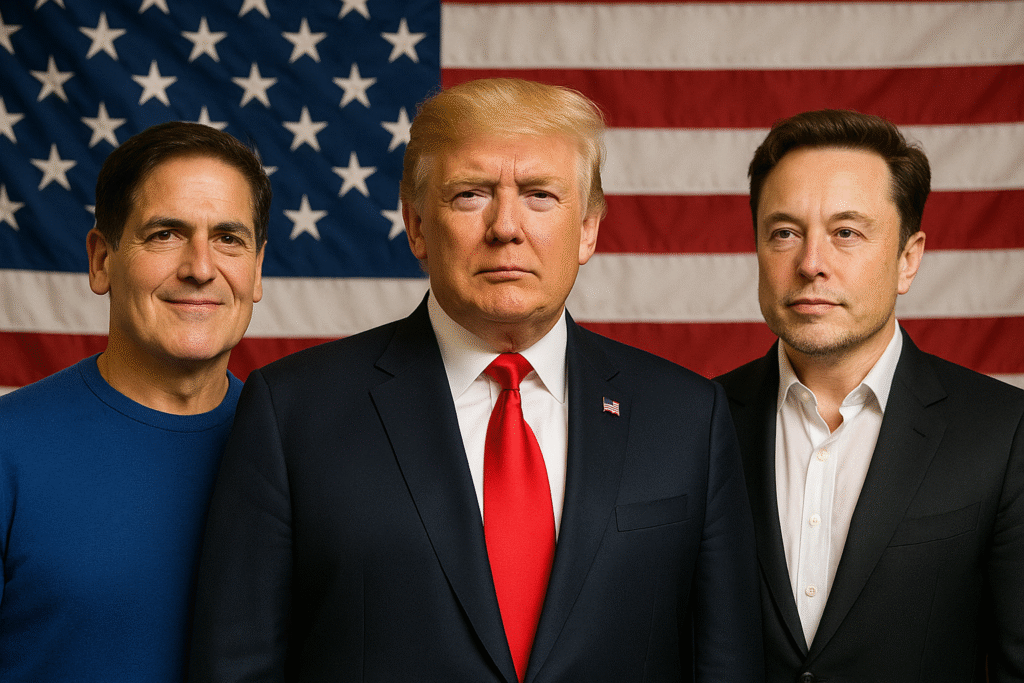
Introduction: The Unlikely Savior We Might Need
We live in an era of massive government bureaucracy, outdated systems, and painfully slow innovation in the public sector. While our smartphones update overnight and corporate supply chains evolve in real time, many government agencies are still shuffling paper, faxing forms, and using software built before Friends aired its finale.
For his encore role as President of the United States, Donald Trump created the Department of Government Efficiency (DOGE) with the goal of eliminating fraud, abuse, and bureaucracy to save money, streamline government, and improve services. To kick off this initiative, he tapped billionaire Elon Musk.
Elon Musk has demonstrated a commitment to public service by volunteering his time as a special government employee for (DOGE). Despite not receiving compensation, Musk dedicated substantial effort to the role, reportedly working seven days a week during the initial 100 days, likening the experience to the intensity of a startup environment. His involvement included participating in cabinet meetings, overseeing significant budget cuts, and implementing reforms aimed at reducing government spending.
While Musk has recently scaled back his involvement to focus more on his business ventures, he continues to contribute to DOGE by planning periodic visits to Washington, D.C., to offer guidance and support. His voluntary service reflects an ongoing dedication to enhancing governmental efficiency and reducing wasteful spending.
Elon Musk’s tenure as the de facto leader of DOGE has been marked by ambitious reforms and significant controversy. Appointed by President Trump in early 2025, Musk aimed to streamline federal operations, targeting a $2 trillion reduction in government spending. However, actual savings have been estimated at around $160 billion, with critics highlighting a lack of transparency and accountability in the reported figures. Musk’s approach included aggressive cost-cutting measures, such as mass layoffs and the restructuring of agencies like USAID and the Social Security Administration, leading to public outcry and legal challenges.
Among the critics, fellow billionaire Mark Cuban has voiced support for the concept of government efficiency but has taken issue with Musk’s execution. Cuban criticized the rapid implementation of DOGE’s reforms, stating, “I think it’s a great idea to cut government… But you don’t do it all at once. That is the definition of lack of strategic thinking”. He also expressed concerns over the impact on Social Security services, warning that the abrupt changes could lead to significant public dissatisfaction. Cuban’s critiques underscore a broader debate on the balance between efficiency and the preservation of essential public services.
So, as Musk exits the spotlight and the Democratic leadership continues to criticize DOGE and Elon Musk and the work they have done, and in the same breath complain that billionaires need to give back (although mostly they mean pay more taxes), there is a great opportunity for them to demonstrate their leadership in improving our federal government. They need to convince Donald Trump and Mark Cuban partner for DOGE Part II.
Yes, that Mark Cuban—billionaire entrepreneur, tech investor, Dallas Mavericks owner, and self-proclaimed Democrat who isn’t shy about offering political opinions. But there’s more to this idea than celebrity splash. Cuban has the brains, business acumen, and public credibility to step in and lead a long-overdue revolution in federal efficiency.
We’re not saying Cuban should run for President. But imagine this: the Department of Government Efficiency—DOGE for short (a nod to the popular cryptocurrency Cuban supports)—led by a man who knows how to cut waste, inspire innovation, and actually get stuff done. Let’s dive into why it’s not such a crazy idea.
The Problem: Government Efficiency Is a National Joke
Red tape. Bureaucracy. Inefficiency. Overhead. Pick your poison—our federal government is full of it.
Whether it’s the IRS struggling to digitize records, the VA’s years-long backlog, or bloated defense budgets with line items no one can justify, inefficiency in the public sector isn’t just annoying—it’s costing taxpayers billions. Worse, it erodes trust.
The American public has come to expect that government processes will be slow, costly, and outdated. And that’s a dangerous mindset. In a global economy, where adversaries use AI to optimize military and economic strategy, the U.S. can’t afford to operate like it’s 1995.
We need a culture shift. We need someone with operational genius, tech know-how, and a track record of challenging the status quo. We need someone like Mark Cuban.
Mark Cuban: More Than a Billionaire
To understand why Cuban is uniquely qualified, it’s worth unpacking what makes him more than just another rich guy with a microphone.
1. Serial Entrepreneur and Efficiency Guru
Cuban built Broadcast.com and sold it to Yahoo for $5.7 billion. Since then, he’s invested in hundreds of companies through “Shark Tank,” often gravitating toward ideas that challenge inefficiency—like streamlining health care billing or democratizing education.
2. Tech-First Thinking
Cuban understands how technology changes systems. He’s spoken publicly about the power of AI, blockchain, and decentralized finance—not just in business but as tools for government transparency and accountability.
3. Political Realism, Not Extremism
Unlike many outspoken billionaires, Cuban leans pragmatic. He’s described himself as a Democrat with libertarian tendencies, supporting social equity while pushing for fiscal responsibility. He’s not afraid to criticize either party, which makes him uniquely positioned to build coalitions in a hyper-polarized system.
4. Public Credibility
Cuban is no stranger to the spotlight. He’s media-savvy, direct, and has a populist appeal that bridges left and right. When he speaks, people listen—and that matters when you’re trying to implement major changes inside the Beltway.
DOGE: Not the Coin, But a Mission
You might be wondering—why call it DOGE? Isn’t that a joke cryptocurrency?
Exactly. That’s part of the appeal.
Cuban has publicly supported Dogecoin, even allowing fans to buy Maverick’s merch using the coin. But beyond the memes, DOGE represents something powerful: disruption. It’s an outsider currency that became a movement. What if we used that same energy to disrupt government operations? Who better to lead it than a billionaire who’s built startups, understands disruption, and wants to see America succeed?
Government Needs a CEO, Not Just Politicians
Politicians are great at messaging, compromise, and passing legislation (well, sometimes). But running a $6 trillion budget is a different beast. It’s more like running a Fortune 50 conglomerate—except with more paperwork and less accountability.
Mark Cuban isn’t afraid to fire underperformers, ask hard questions, and make fast decisions. Imagine him walking into the DMV and saying, “Why are we still printing forms on dot matrix printers?” Then fixing it. Fast.
Government needs more CEO mindset and less CYA culture. DOGE, under Cuban, could lead that shift.
What Would Cuban’s DOGE Actually Do?
While the first order of business would probably be to “close out” the current DOGE initiatives, there are many more fruit trees to pick from. Here’s what a Mark Cuban-led Department of Government Efficiency might focus on:
1. Digital Overhaul of Federal Services
Move every form, process, and transaction online. Make interfaces usable. Think TurboTax meets the IRS. Think Amazon checkout meets Social Security benefits. And for the love of bureaucracy, end the fax machine era.
2. Kill the Red Tape
Launch an initiative to eliminate or automate 25% of existing bureaucratic procedures within the first 2 years. Reward agencies that innovate. Penalize those that don’t.
3. Real-Time Transparency Dashboards
Every American should be able to see where their tax dollars go in real time—agency by agency, program by program. It’s not impossible. Technology exists. All it needs is the will—and someone to build it.
4. Talent Exchange With Tech Companies
Partner with Silicon Valley, Austin, and other innovation hubs to create a “reverse pipeline” of engineers, designers, and data scientists who do short-term government stints. Offer incentives. Build a new public-service tech culture.
5. End Contract Waste
Audit government contracts like a VC audits a startup’s burn rate. Cut bloated deals. Encourage open bidding. Save billions.
Mark Cuban Has Already Talked the Talk—Now Let Him Walk the Walk
Cuban has made no secret of his political opinions. He’s criticized healthcare inefficiencies, slammed bloated defense spending, and pushed for innovation-driven government solutions in interviews, blogs, and tweets. He even toyed with running for President in 2020. So what’s stopping him from taking on a role like this?
Maybe he’s waiting for the right invitation. Maybe no one’s asked. Or maybe billionaires need a new playbook for public service—one that doesn’t just involve writing checks or launching vanity foundations but offering their time and talent to fix systems that affect everyone.
Public Service Is the Billionaire’s New Obligation
Let’s face it: the age of billionaire hero worship is fading. Americans are more skeptical of concentrated wealth than ever before. But there’s a path forward—one that involves responsibility, not retreat.
Mark Cuban doesn’t need another dollar. But what if he gave something far more valuable—his time?
Taking on DOGE wouldn’t just help the country, it would set a powerful example for other high-net-worth leaders. Bezos built space rockets. Musk pushed EVs and AI. But what if the next billionaire legacy was fixing the Postal Service?
This is the new civic frontier. Not just philanthropy, but governance.
Potential Criticisms (and Why They Don’t Hold Up)
Critics might scoff: “Why let a billionaire run part of the government?” But the truth is, billionaires already influence politics—through lobbying, dark money, and backroom deals. Wouldn’t it be better to have one working in the open, directly accountable, and trying to make systems better?
Others might argue Cuban lacks public sector experience. But that’s the point. The public sector needs disruption. And Cuban knows how to shake up broken systems.
As for concerns about power and ego—this role wouldn’t give Cuban legislative control or unchecked authority. DOGE would be a tool, not a throne.
Conclusion: It’s Time to Rethink Who Runs What
Mark Cuban is loud, opinionated, and unafraid of controversy. He’s also smart, strategic, and one of the few billionaires who seems to actually like people. That’s a rare combination—and exactly what we need if we want to reinvent how our government operates.
It’s time to get serious about fixing the inefficiencies that waste money and frustrate citizens. And maybe, just maybe, it’s time we let a businessman who’s spent his life fixing broken systems take a crack at one of the biggest fixer-uppers of all: the federal government.
So, here’s the pitch: Mark Cuban for DOGE. Not just because he can. But because we need him to.