Introduction
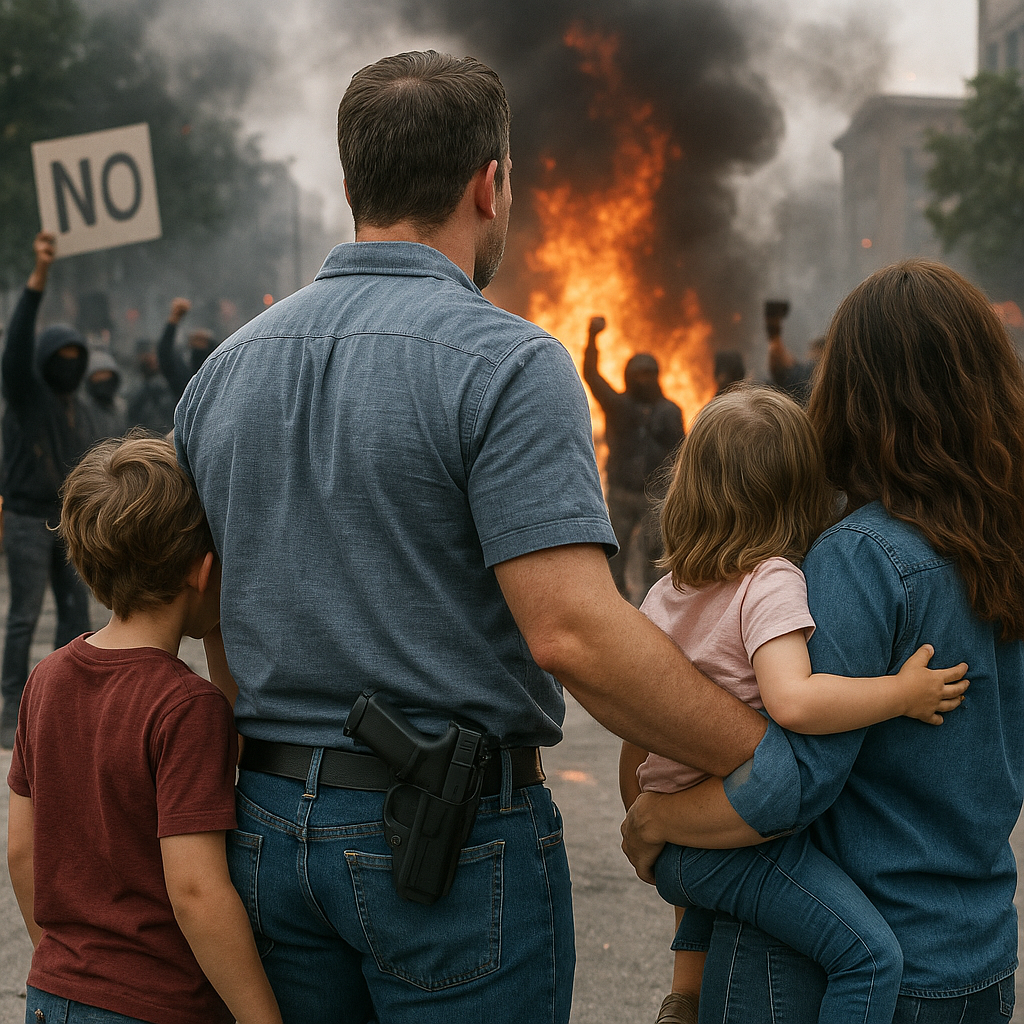
In recent years, political polarization in the United States has reached unprecedented levels, fueling tensions that sometimes erupt into violence. Protests, once seen as a cornerstone of democratic expression, have increasingly become flashpoints for conflict, with certain groups—particularly Jews and conservatives—reporting targeted hostility. This raises a pressing question: should Americans arm themselves to protect their families and communities in the face of such unrest? This blog post explores the dynamics of political violence, its impact on specific groups, and the complex debate surrounding self-armament as a response. By examining historical context, recent trends, legal frameworks, and societal implications, we aim to provide a nuanced perspective on this contentious issue.
The Rise of Political Violence in Protests
Political violence, defined as the use of force to achieve political objectives, has a long history in America, from the Civil War to the civil rights era. However, the past decade has seen a resurgence, particularly during protests. High-profile events like the 2017 Charlottesville “Unite the Right” rally, the 2020 Black Lives Matter protests, and the January 6, 2021, Capitol riot highlight how ideological divides can escalate into physical confrontations. According to the Center for Strategic and International Studies (CSIS), political violence incidents in the U.S. spiked by 50% between 2016 and 2020, with protests often serving as catalysts.
Protests, by their nature, are emotionally charged and attract diverse actors, including extremists who exploit chaos to push agendas. The Anti-Defamation League (ADL) reported a 140% increase in antisemitic incidents from 2015 to 2020, with many occurring during protests or public gatherings. Similarly, conservatives have faced harassment, doxxing, and physical attacks, particularly in urban centers where progressive activism dominates. For example, during the 2020 protests, conservative journalists and activists reported being targeted by groups like Antifa, with incidents ranging from verbal abuse to assaults.
Antisemitism in Protests
Antisemitism has surged in recent years, often intertwined with political protests. The ADL documented 2,717 antisemitic incidents in 2023 alone, including vandalism, harassment, and assaults. Protests related to the Israeli-Palestinian conflict have been particularly volatile. For instance, during 2021 protests in major cities like New York and Los Angeles, Jewish individuals and businesses were attacked, with synagogues defaced and chants like “From the river to the sea” interpreted by some as calls for violence. These incidents reflect a troubling trend where geopolitical grievances translate into domestic antisemitism.
Jewish communities face unique challenges in these settings. Unlike other groups, their religious and ethnic identity often makes them visible targets, especially when protests involve Middle Eastern politics. The fear of being singled out has led some Jewish Americans to avoid public demonstrations or conceal their identity, a chilling echo of historical marginalization.
Targeting of Conservatives
Conservatives, particularly those vocal about their views, have also faced aggression during protests. The rise of “cancel culture” and public shaming has spilled into physical confrontations. In 2019, journalist Andy Ngo was assaulted by Antifa members during a Portland protest, sustaining injuries that required hospitalization. Similar incidents have occurred at college campuses, where conservative speakers like Ben Shapiro or Charlie Kirk have faced disruptions or threats. A 2022 report by the Foundation for Individual Rights in Education (FIRE) found that 66% of conservative students felt unsafe expressing their views in public settings, compared to 23% of liberal students.
This hostility stems from a broader cultural divide, where conservatives are often stereotyped as bigots or oppressors, justifying aggression in the eyes of some activists. Social media amplifies this, with platforms like X showcasing real-time examples of conservatives being harassed at protests, from MAGA hat-wearers being spit on to rally attendees being chased by mobs. With such harassment – usually from the left side of the isle – it is no wonder conservatives cling so tightly to the 2nd amendment and reject any legislation that pare down their rights.
The Case for Arming: Self-Defense in an Uncertain Era
Given these trends, many Americans are reevaluating their approach to personal safety. The Second Amendment, enshrined in the U.S. Constitution, guarantees the right to bear arms, a provision rooted in the principle of self-defense. For those facing targeted violence, arming oneself can seem like a logical response. Let’s explore the arguments for and against this approach.
Arguments for Arming
- Protection Against Immediate Threats
The unpredictability of protests can leave individuals vulnerable. For Jews attending synagogues or conservatives at public events, the risk of sudden violence is real. Firearms provide a means of self-defense when law enforcement is absent or overwhelmed. For example, during the 2020 Kenosha protests, Kyle Rittenhouse, then 17, armed himself and later claimed self-defense in a shooting incident, sparking intense debate. While controversial, his case underscores the perception that individuals must take responsibility for their safety when public order falters. - Deterrence Effect
Armed citizens may deter potential attackers. Studies, like one from the National Bureau of Economic Research (2017), suggest that concealed carry laws reduce violent crime rates by 10-15% in some areas, as would-be aggressors weigh the risk of encountering an armed victim. For Jews and conservatives, visibly armed presence at events could discourage targeting. - Empowerment and Autonomy
Arming oneself fosters a sense of agency in a chaotic world. For communities feeling marginalized, firearms can symbolize resistance against oppression. Jewish gun ownership, for instance, has risen, with organizations like the Jewish Firearms Alliance advocating for Second Amendment rights as a bulwark against antisemitism. Similarly, conservative groups like the Proud Boys have embraced armed self-defense as a response to perceived threats. - Historical Precedent
History shows that disarmed populations are vulnerable to violence. The Holocaust, where Jews were stripped of weapons before persecution, is often cited by pro-gun advocates. Conservatives point to examples like the 1992 Los Angeles riots, where armed Korean shop owners protected their businesses when police couldn’t. These cases fuel the argument that self-armament is a necessary safeguard.
Legal Considerations
The legality of arming for self-defense varies by state. In open-carry states like Texas, individuals can carry firearms in public, including at protests, provided they follow regulations. Concealed carry permits, available in most states, offer another option, with over 21 million permits issued nationwide by 2023, per the U.S. Concealed Carry Association. However, laws on using deadly force are strict, typically requiring an imminent threat to life. Castle doctrine and stand-your-ground laws, adopted in states like Florida, expand self-defense rights but vary widely.
For Jews and conservatives, navigating these laws is critical. Carrying a firearm at a protest can escalate tensions, and misjudging a threat can lead to legal consequences. Training and legal awareness are essential to avoid tragic mistakes.
The Case Against Arming: Risks and Alternatives
While arming oneself may feel empowering, it’s not without risks. Critics argue that widespread gun ownership, especially in volatile settings like protests, can exacerbate violence rather than prevent it.
Arguments Against Arming
- Escalation of Violence
Firearms can turn minor confrontations deadly. A 2021 study in the American Journal of Public Health found that armed protests were 6 times more likely to result in injuries than unarmed ones. Introducing guns into emotionally charged environments risks miscommunication or miscalculation, as seen in cases where armed counter-protesters clashed with demonstrators. - Alienation and Stigma
Armed individuals may be perceived as aggressors, alienating potential allies. For Jewish communities, visibly armed members could reinforce stereotypes of militancy, complicating efforts to build bridges. Conservatives carrying firearms at protests may similarly be labeled as extremists, further polarizing discourse. - Legal and Social Risks
Misusing a firearm, even in self-defense, can lead to prosecution or civil lawsuits. Public opinion often turns against armed citizens, as seen in media coverage of Rittenhouse. Additionally, carrying guns in urban areas with strict regulations, like New York City, can result in arrests, even for permitted owners. - Alternatives to Firearms
Non-lethal options, like pepper spray or de-escalation training, offer safer ways to manage threats. Community-based solutions, such as neighborhood watch programs or private security, can also protect without the risks of firearms. For example, some Jewish communities have hired armed guards for synagogues, balancing safety with public perception.
Societal Implications
Widespread armament could reshape public spaces. If protests become armed standoffs, the right to free assembly may erode, as fear deters participation. Moreover, arming specific groups could deepen societal divides, reinforcing an “us vs. them” mentality. The U.S. already has the highest per capita gun ownership globally, with 120.5 firearms per 100 people (Small Arms Survey, 2017). Further proliferation risks normalizing violence as a political tool.
Balancing Rights and Responsibilities
The decision to arm oneself is deeply personal, shaped by individual circumstances, values, and risk assessments. For Jews and conservatives facing targeted hostility, the instinct to protect oneself is understandable. Yet, it’s crucial to weigh the broader consequences. Arming may deter violence in some cases but escalate it in others, and legal missteps can have lifelong repercussions.
Practical Steps for Self-Protection
- Situational Awareness
Avoiding high-risk areas, like volatile protests, is the first line of defense. Training in situational awareness can help individuals recognize threats early and exit safely. - Non-Lethal Tools
Pepper spray, tasers, or personal alarms are effective for self-defense without the lethal risks of firearms. These are legal in most states, though restrictions apply in some cities. - Community Organizing
Jewish and conservative communities can pool resources for collective safety, such as funding private security or advocating for stronger police presence at events. - Firearm Training
For those choosing to arm, rigorous training is non-negotiable. Programs like the NRA’s Basic Pistol Course or USCCA’s concealed carry classes teach safe handling, legal boundaries, and de-escalation. - Engaging in Dialogue
Addressing the root causes of political violence—polarization, misinformation, and dehumanization—requires dialogue. Platforms like X can amplify constructive voices, though they also risk spreading vitriol. Curating one’s media diet to prioritize reason over outrage is a start.
The Role of Institutions
Government and law enforcement play a critical role in mitigating political violence. Strengthening police training for crowd control, ensuring impartial enforcement, and prosecuting offenders regardless of political affiliation can restore trust. However, distrust in institutions, fueled by events like the 2020 defund-the-police movement, has driven some to take safety into their own hands. Rebuilding faith in public safety requires consistent, transparent action.
Civil society also has a role. Universities, media, and community leaders can foster dialogue to reduce polarization. For instance, interfaith coalitions have worked to counter antisemitism, while bipartisan initiatives like Braver Angels aim to bridge ideological divides.
Conclusion
Political violence, particularly during protests, poses a real threat to groups like Jews and conservatives, who often face targeted hostility. The decision to arm oneself is a complex one, balancing the right to self-defense with the risks of escalation and societal division. While firearms offer a sense of security, they come with legal, ethical, and practical challenges. Alternatives like non-lethal tools, community organizing, and dialogue provide viable paths to safety without fueling a cycle of violence.
Ultimately, addressing political violence requires a multifaceted approach: individuals must prioritize personal safety, communities must build resilience, and institutions must uphold justice. As Americans navigate these turbulent times, the goal should be a society where protests remain a platform for expression, not a battleground for survival.
The Boston Globe had it right in 2022: we need bipartisan leaders to denounce violence unequivocally, no exceptions. Boston Globe, 2022. Until that happens, I’ll keep my Glock close and my eyes open.
About the Author

Mister San-Marcos is a resident of the great state of Texas and considers himself a strategic thinker on all topics. Politically, you’ll find him to be more right-leaning, but not too far. He has lived a wonderful life and a successful career and is now focusing his time on sharing his thoughts and recommendations to the world.